Lorem Ipsum Generator: The Complete Guide to Placeholder Text
Table of Contents
- 1. What Is Lorem Ipsum, Really?
- 2. What Is a Lorem Ipsum Generator?
- 3. Why Designers Still Reach for Placeholder Text
- 4. Funny Lorem Ipsum Variants Worth Knowing
- 5. Controlling Length: Words, Characters, and Paragraphs
- 6. Using Placeholder Text in HTML and Code
- 7. When Placeholder Text Hurts More Than It Helps
Every designer knows the moment. The layout is finished — the grid is perfect, the typography is set, the spacing breathes — and then you hit the empty text boxes. The copy isn't ready. The client hasn't sent the about page. The product descriptions are “coming soon.” So you reach for the oldest trick in the design book: a block of Latin-looking nonsense that has been filling empty layouts for over half a century.
That nonsense has a name — lorem ipsum — and the fastest way to get it is a lorem ipsum generator: a small online tool that produces as many paragraphs, words, or sentences of placeholder text as you need, instantly. This guide covers what lorem ipsum actually is, where it came from, why professionals still use it, and how to generate exactly the right amount for your mockups — plus the funny variants designers secretly love.
What Is Lorem Ipsum, Really?
Lorem ipsum isn't random. The standard passage — “Lorem ipsum dolor sit amet, consectetur adipiscing elit, sed do eiusmod tempor incididunt ut labore et dolore magna aliqua...” — is scrambled Latin drawn from De finibus bonorum et malorum (On the Ends of Good and Evil), a philosophical treatise written by the Roman statesman Cicero in 45 BC. The words are real Latin vocabulary, but they've been chopped, rearranged, and truncated until the sentences mean nothing — which is precisely the point.
The detective story behind it is worth knowing. In the early 1980s, Richard McClintock, a Latin professor at Hampden-Sydney College in Virginia, recognized an unusual word — “consectetur” — in a piece of typesetting filler and traced the whole passage back to sections 1.10.32–33 of Cicero's text. But the filler itself is older than his discovery: it appeared on Letraset dry-transfer sheets in the 1960s, which is how it jumped from print shops into mainstream graphic design, and it rode the desktop-publishing wave of the 1980s straight onto the web.
So when someone asks what lorem ipsum is, the honest answer has two layers. Historically, it's a 2,000-year-old philosophical text that got mangled into design filler. Practically, it's the industry's standard placeholder text — a stand-in that looks like real copy, with normal word lengths, natural punctuation, and realistic paragraph shapes, without distracting anyone with actual meaning.
What Is a Lorem Ipsum Generator?
A lorem ipsum generator is an online tool that produces placeholder text on demand. Instead of copying the same tired paragraph from an old file, you open the generator, choose how much text you need — a few words for a button label, a paragraph for a card, pages of it for a long-form layout — and get fresh dummy text in one click. The better ones let you pick the unit (words, sentences, or paragraphs), set an exact count, and copy the result straight to your clipboard.
You may also see the same kind of tool called a lipsum generator — “lipsum” is the community's nickname, borrowed from one of the earliest and still most-visited generator sites on the web. Whatever the name, the job is identical: instant, meaningless, realistic-looking text for mockups. A good placeholder text generator runs entirely in your browser, needs no sign-up, and never uploads anything — because there's nothing to upload; it's just text.
Why not just type “asdf asdf” or paste the same paragraph everywhere? Because realistic filler does real work. A proper online lorem ipsum generator gives you natural word-length distribution and punctuation, which is what makes a mockup read as a mockup of a real page rather than a sketch with scribbles in it. And when you need a quick dummy text generator for a wireframe at 11pm, “close enough” text is the difference between a design that looks finished and one that looks abandoned.
Why Designers Still Reach for Placeholder Text
It's tempting to think placeholder text is a relic — that with modern content workflows and CMS previews, nobody needs fake Latin anymore. In practice, designers reach for a placeholder text generator constantly, for reasons that have nothing to do with laziness.
Layout before copy. Copy is almost always late. Marketing hasn't approved the headline, legal is reviewing the disclaimer, the founder is “still thinking about the about page.” A designer who waits for final copy waits forever. Placeholder text lets the layout move forward: you finalize the grid, test the typographic scale, and present a complete-looking design while the words catch up.
Keeping reviews about design. Show a client a mockup with draft copy and the entire meeting becomes a copy-editing session. Show the same mockup with lorem ipsum and the conversation stays where it belongs — on hierarchy, spacing, and visual weight. The nonsense text is a polite “don't read this yet” sign.
Stress-testing typography. Realistic filler reveals problems that empty boxes hide: a headline that wraps badly at certain widths, body text that creates widows and orphans, a card layout that breaks when one item has a longer title. A paragraph of lorem ipsum exercises the typesetting the way real copy will.
Filling the awkward gaps. Avatars without photos, product cards without descriptions, testimonial sliders with two quotes instead of five — placeholder text keeps every component looking intentional during development instead of broken.
Funny Lorem Ipsum Variants Worth Knowing
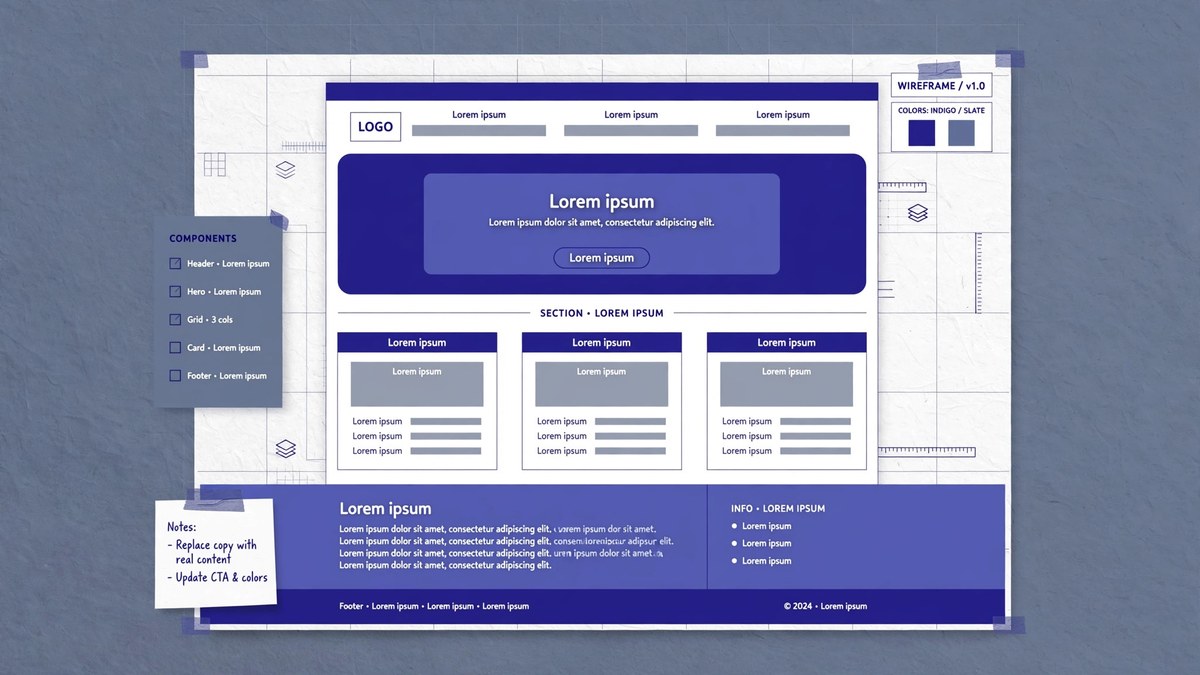
Classic lorem ipsum is the professional default, but the internet has produced a joyful menagerie of themed alternatives — so if you're hunting for a lorem ipsum generator funny enough to make your team laugh on a Friday deploy, you're in luck — and a funny lorem ipsum generator is genuinely useful when the audience is your own team. Filling an internal staging site with dessert or zombie vocabulary makes it unmistakable that the content is temporary, which is exactly what you want before launch.
The greatest hits: Bacon Ipsum (meat-themed filler for the carnivorously inclined), Hipster Ipsum (artisan, small-batch, sustainably-sourced nonsense), Cupcake Ipsum (dessert vocabulary), Zombie Ipsum (for horror projects and Halloween deploys), and Cat Ipsum (“purr purr nap sniff”). There are dozens more, from sci-fi to corporate-buzzword themes. A funny lorem ipsum generator swaps the Latin for themed word lists while keeping the same realistic sentence shapes.
One rule: keep the jokes internal. Themed filler is perfect for your team's dev environment and a terrible idea on a client-facing preview link. Nothing derails a stakeholder review like explaining why the homepage currently extols the virtues of bacon. Use classic lorem ipsum anywhere someone outside the team might look — save the humor for localhost.
Controlling Length: Words, Characters, and Paragraphs
Not all placeholder needs are paragraph-shaped. Sometimes you need exactly twelve words for a hero subheading, or precisely 160 characters for a meta-description mockup, or three sentences for a testimonial card. That's why a serious lorem ipsum generator offers a word count mode and a character count mode alongside the classic paragraph output.
Character counts matter more than most people expect. UI copy lives inside hard limits: button labels, navigation items, form placeholders, push-notification previews, and SEO meta descriptions (roughly 155–160 characters) all have ceilings where text gets truncated with an ellipsis. A lorem ipsum generator character count mode lets you test the worst case — the longest realistic string — before real copy arrives, so you find out about the truncation in the mockup instead of in production.
Word counts serve a different purpose: estimating reading time, checking that a two-line card title doesn't become four lines, or matching the approximate length of the final copy so the layout doesn't shift when words are swapped in. A lorem ipsum generator word count mode gives you that precision — dial in fifty words for the excerpt, two hundred for the article body, and the design holds its shape when the real article lands.
Using Placeholder Text in HTML and Code
In practice, placeholder text usually ends up inside markup, so it pays to handle the HTML gracefully. The simplest workflow: generate your paragraphs, then wrap each in paragraph tags yourself — or use an HTML lorem ipsum generator mode that emits the tags for you, ready to paste straight into your template without hand-wrapping anything.
A few practical notes from the trenches. First, never commit lorem ipsum to a production branch — it has a way of surviving code review and greeting real users (everyone has a story). Mark it clearly: an HTML comment like “PLACEHOLDER — replace with real copy” next to the filler saves future embarrassment. Second, if you're building a component library, realistic-length filler makes your components look honest in isolation. Third, remember that screen readers will dutifully read your Latin aloud to anyone who opens a staging link — another reason to keep filler out of anything public.
For rapid prototyping, many developers keep a generator bookmarked alongside their other text utilities — a word counter for checking the final copy's length when it arrives, a case converter for fixing headline capitalization. Placeholder in, real copy out, measured along the way.
When Placeholder Text Hurts More Than It Helps
Lorem ipsum is a tool, and like any tool it has a wrong side. The three classic mistakes:
Shipping it. Search engines can and do index staging sites — “lorem ipsum dolor sit amet” showing up in your results is a special kind of brand damage. Add noindex to staging environments, and search your production build for “lorem” before every deploy.
Letting it make content decisions. Filler can't tell you whether your pricing page needs three tiers or four, or whether anyone understands your value proposition. It holds the shape of content; it never substitutes for content strategy. If the design only works with meaningless text in it, the design isn't finished.
Using it where meaning matters. Accessibility testing, user testing, and translation workflows all need real words. Watching a user try to complete a task against gibberish tells you nothing except that gibberish is confusing — which you already knew. Swap in representative real copy before any test that involves comprehension.
Try it free — no sign-up
Generate placeholder text in seconds. Words, sentences, or paragraphs — everything happens in your browser.
Open the Lorem Ipsum GeneratorFrequently Asked Questions
What is a lorem ipsum generator?
A lorem ipsum generator is an online tool that creates placeholder (dummy) text on demand. You choose how much text you need — a few words, a sentence, a paragraph, or several pages — and it instantly produces realistic-looking Latin-style filler you can paste into mockups, wireframes, and prototypes. Good generators let you control the unit (words, sentences, or paragraphs) and the exact count, and they run entirely in your browser with no sign-up.
What is lorem ipsum? Is it real Latin?
Lorem ipsum is the industry-standard placeholder text used in design and publishing. It looks like Latin but isn't meaningful: it's scrambled text drawn from De finibus bonorum et malorum, a philosophical work by the Roman orator Cicero written in 45 BC. In the 1980s, Latin professor Richard McClintock traced the filler back to sections 1.10.32–33 of Cicero's text. The words are real Latin vocabulary, but they've been chopped and rearranged until the sentences carry no meaning — which is exactly what makes it useful as a neutral stand-in for real copy.
How much placeholder text should I generate?
Match the approximate length of the real copy that will eventually replace it. Use a word count mode when you need a specific number of words (for headlines or card titles), and a character count mode when the text must fit a hard limit (button labels, meta descriptions, push notifications). For body copy, one to three paragraphs usually exercises the layout enough to reveal typographic problems like bad line breaks or cramped spacing.
Can I use lorem ipsum in a commercial project?
Yes. Lorem ipsum is effectively public-domain filler — it's been in circulation since the 1960s Letraset era and no one owns it. No attribution or license is required. That said, it's meant for mockups and drafts, not for anything the public will see: always replace it with real copy before launch, and keep staging sites noindexed so placeholder text never ends up in search results.
What's the difference between lorem ipsum and other dummy text?
Lorem ipsum is the classic, neutral default — it reads as “obviously temporary” to anyone in the industry. Alternatives include themed funny variants (Bacon Ipsum, Hipster Ipsum, Cupcake Ipsum) that use playful vocabulary instead of Latin, and plain greeking (grey bars with no text at all). Themed variants are fun for internal mockups but should stay off client-facing previews; classic lorem ipsum is the safe choice anywhere an outsider might look.
Are funny lorem ipsum generators okay to use with clients?
Keep them internal. A funny lorem ipsum generator is great for your team's staging environment — themed filler makes it unmistakable that content is temporary. But on anything a client or stakeholder will see, stick with classic lorem ipsum. Humor in placeholder text distracts from the design review and can read as unprofessional if it ever leaks into a screenshot or a forwarded link.