Word Unscrambler: Unscramble Any Letters in Seconds
Table of Contents
You know the feeling: a rack of seven tiles in Scrabble, five gray boxes staring back at you in Wordle, or a six-letter jumble in Text Twist with the timer running down. Somewhere in those letters is a great word — you can feel it — but your brain keeps circling the same two or three options.
A word unscrambler ends that loop in about a second. Type in your letters, and it returns every valid word hiding inside them, sorted so the best options hit you first. This guide covers what a word unscrambler actually does, how unscrambling works under the hood, and the letter-count strategies that turn it from a cheat-sheet into a genuine skill-builder for Scrabble, Words With Friends, Wordle, and Text Twist.
What Is a Word Unscrambler?
A word unscrambler is a free online tool that takes a scrambled set of letters and shows you every real word you can spell from them. Enter something like RTAEER and it instantly returns rate, tear, reta, rat, tea, eat — every valid combination, usually ordered from longest to shortest so the highest-value answers appear first.
People reach for a word unscrambler in three main situations. The first is competitive word games: Scrabble, Words With Friends, and similar tile games where one great play can swing the score by 50+ points. The second is puzzle games with a fixed letter count — Wordle's five letters, Text Twist's six, or daily jumble puzzles in the newspaper. The third is the most underrated: learning. Studying the full list of words your letters can make trains your brain to spot patterns — prefixes like re- and un-, suffixes like -ing and -tion — that you start recognizing without help.
It helps to distinguish a word unscrambler from its close cousin, the anagram solver. An anagram solver typically finds words that use all of your letters (true anagrams), while a word unscrambler shows words of every length your letters can build — the 7-letter bingo, the 5-letter strong play, and the 2-letter filler you'll need when the board is tight. If you want the deeper theory behind anagrams — tile values, bingo strategy, and two-letter word lists — our anagram solver and Scrabble guide covers that ground. This guide stays focused on the unscrambler itself: how to unscramble letters fast and how to use the results well.
How Unscrambling Actually Works
Unscrambling looks like magic, but the mechanism is refreshingly simple — and understanding it explains why computers are so much better at it than humans.
Step one is permutation: generating every possible arrangement of your letters. The math grows brutally fast. Three letters have 6 arrangements (3 factorial). Five letters have 120. Seven letters have 5,040. A human staring at seven tiles will realistically test a few dozen arrangements before fatigue sets in; a computer checks all 5,040 in milliseconds.
Step two is dictionary matching: each arrangement is checked against a word list, and only real words survive. This is where unscramblers differ enormously in quality. A thin dictionary of a few thousand common words will miss perfectly valid plays — obscure but legal words like qi, za, or jo that win Scrabble games. A serious word unscrambler needs tens of thousands of entries.
That dictionary depth is exactly what separates the Toolenix word unscrambler from the average free word unscrambler floating around the web. It checks your input against 55,538 English words spanning 2 to 6 letters — the range that covers nearly every real game situation, from quick 2-letter Scrabble fillers to full 6-letter Text Twist solutions. And because the whole thing runs client-side in your browser, your letters are never uploaded anywhere: no account, no tracking, no waiting for a server.
One more thing the mechanism explains: why unscramblers handle repeated letters flawlessly while humans stumble. Enter EELTTR and the tool knows you have exactly two E's and two T's — it will only suggest words that respect those counts. Try doing that reliably in your head with the clock running. This is also the answer to one of the most-searched questions about these tools: yes, a word unscrambler can repeat letters, as long as the repeats exist in your input.

How to Use the Toolenix Word Unscrambler
Using it takes about ten seconds, and there's deliberately nothing to learn:
1. Type your letters. Open the Word Unscrambler and enter the letters exactly as they appear — your Scrabble rack, your Wordle guesses, your Text Twist jumble. Order doesn't matter; case doesn't matter.
2. Scan longest-first results. Matches appear grouped by word length, longest first. In Scrabble and Words With Friends, the longest word usually scores most (more tiles played, plus the 50-point bingo bonus for using all seven). In Wordle, jump straight to the 5-letter group.
3. Pick with the board in mind. The unscrambler gives you candidate words — you still choose. In Scrabble, a shorter word on a triple-word square beats a longer word on plain squares. In Wordle, prefer candidates that test new letters over ones that repeat what you already know.
The whole flow is private by design: everything runs in your browser's memory, so the letters you type never touch a server. No sign-up, no history stored anywhere but your own device.
5-Letter Strategy: The Wordle Playbook
Wordle made the 5 letter word unscrambler one of the most-searched helpers on the internet, and the strategy here is different from Scrabble: you're not maximizing points, you're maximizing information.
A Wordle word unscrambler shines in the mid-game. Say you've played two guesses and you know the word contains R, A, and T, but not their positions, and you've ruled out a dozen other letters. Type your remaining candidate letters into the unscrambler and look at the 5-letter results. Now apply your clues mentally: discard anything that puts a confirmed-absent letter in play, and prioritize words that place your yellow letters in new positions.
The pro move is using the unscrambler before you're stuck. After your second guess, generate the candidate list and pick your third guess from words that test the most untested letters — even if a word isn't your final answer, a guess like CRANE followed by SPOIL covers ten distinct common letters. Players who use a word unscrambler this way — as an information engine rather than an answer machine — consistently solve in 3–4 guesses and, more importantly, start internalizing which letter combinations are common in English. For more Wordle-specific tactics, see our Wordle solver tips guide.
One caution: a raw 5-letter word unscrambler doesn't know your green/yellow/gray clues, so treat its list as raw material. The skill is in the filtering — and that filtering is exactly what makes you better at the game over time.
7-Letter Strategy: Finding the Longest Word
In Scrabble and Words With Friends, the dream play is the bingo: using all seven tiles for a 50-point bonus. A 7 letter word unscrambler is the fastest way to check whether your rack hides one.
The strategy has two layers. First, scan the 7-letter results for anything playable — with common racks like AEEILNR or AEINRST, there's almost always a bingo (alien + er, retains, anestri family words). Second — and this is what separates decent players from strong ones — if no 7-letter word fits the board, drop to the 6- and 5-letter groups and look for plays that set up next turn: dump awkward letters (Q, Z, X, J) now, keep flexible ones (S, blank, common vowels).
A scrabble word unscrambler earns its keep beyond bingos too. Mid-game boards are crowded, and the winning play is often a short word tucked into a tight spot — a 3-letter word hitting two triple-letter squares simultaneously. Because the unscrambler lists every length, you can check the short groups for high-value parallel plays you'd never have spotted manually. The anagram guide's tile-value breakdown pairs well here if you want to go deeper on scoring.
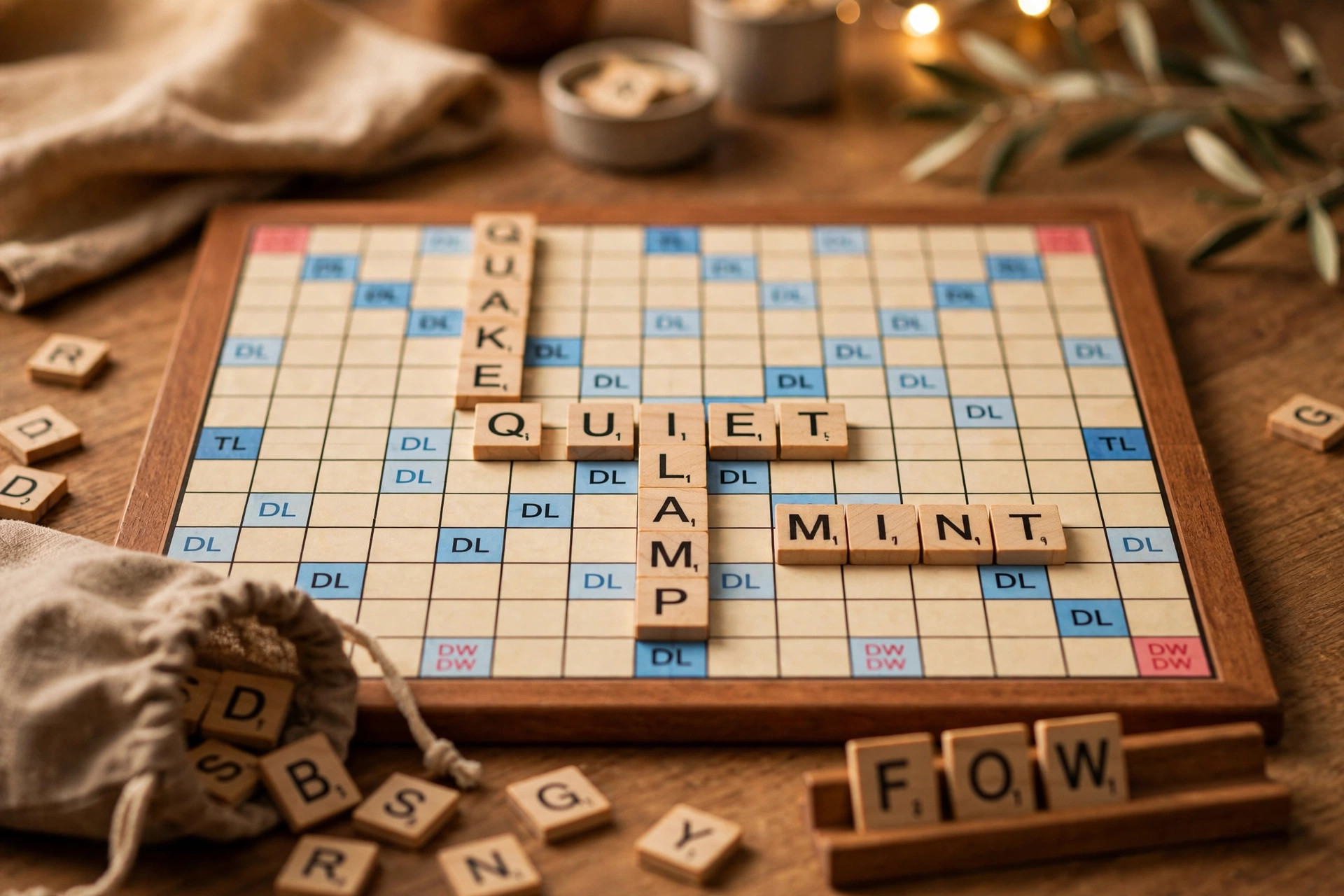
Help for Text Twist, Spanish & More Word Games
Scrabble and Wordle get the headlines, but the word unscrambler game crowd is much bigger than that.
Text Twist is the classic case: six jumbled letters, find as many words as you can, with the six-letter word as the jackpot. A text twist word unscrambler approach is straightforward — enter all six letters, and the longest group hands you the jackpot word immediately while the shorter groups fill out your list. Since Text Twist rewards every valid word, working through the results systematically beats random guessing by a wide margin.
Non-English play is a growing niche: a Spanish word unscrambler follows the same permutation logic against a Spanish word list, which matters because Spanish letter frequencies (and gems like the Ñ) make English-trained instincts actively misleading. If you play word games in Spanish, make sure your unscrambler explicitly supports a Spanish dictionary rather than just tolerating the input.
Daily newspaper jumbles, mobile anagram apps, and classroom vocabulary games all reduce to the same operation: unscramble words from a fixed letter set. Once you're comfortable with the longest-first scanning habit, the same three-step flow — enter letters, scan by length, pick for the situation — transfers to every one of them.
Pro Tips for Better Results
What makes the best word unscrambler isn't just speed — it's the habits around it. Five that actually move the needle:
Enter letters once, mine repeatedly. Don't retype for every question. One input gives you every length group; answer "what's my longest word?" and "what's my best 3-letter filler?" from the same results.
Learn the common stems. After a few sessions you'll notice the same scaffolding everywhere: RE-, UN-, -ING, -ERS, -TION. The unscrambler is teaching you morphology for free — pay attention and you'll need it less.
Cross-check game dictionaries. Tournament Scrabble (NASPA/NWL) and Words With Friends use slightly different word lists. A word the unscrambler finds is valid English, but if you're playing competitively, verify against your game's official list before committing a bingo.
Use it as a post-game coach. The highest-value habit: after each game, run your racks through the unscrambler and note what you missed. Players who do this for two weeks report the single biggest jump in their scores — you're converting every game into a lesson.
Prefer private tools. Free word unscrambler sites that require accounts or plaster the screen with ads are monetizing your attention mid-game. A client-side tool with no sign-up keeps your letters on your device and your focus on the board.
Try it free — no sign-up
Run the numbers yourself in seconds. Everything happens in your browser.
Open the Free Word UnscramblerFrequently Asked Questions
What is a word unscrambler?
A word unscrambler is a free online tool that takes a jumble of letters and returns every valid word you can spell from them. You type in letters like “RTAEER” and it instantly shows matching words — “rate,” “tear,” “reta,” and longer options — by comparing every possible arrangement against a built-in dictionary. It’s the fastest way to unscramble words for Scrabble, Words With Friends, Wordle, and Text Twist.
What is the best word unscrambler?
The best word unscrambler is fast, free, private, and backed by a large dictionary. Look for one with no sign-up, no ads interrupting your game, results sorted by word length, and a dictionary of tens of thousands of words — the Toolenix word unscrambler, for example, checks your letters against 55,538 English words (2–6 letters) entirely in your browser, so nothing you type ever leaves your device.
Can a word unscrambler repeat letters?
Yes — a good word unscrambler handles repeated letters correctly. If you enter “EELTTR,” it knows you have two E’s and two T’s and will only suggest words that use each letter no more times than it appears. That’s also why unscramblers beat manual guessing: with duplicate letters, the number of possible arrangements explodes, and humans reliably miss valid words.
How many letters can I unscramble at once?
Most free word unscramblers handle 2 to 15 letters comfortably. The Toolenix unscrambler is optimized for 2–6 letter inputs with its 55,538-word dictionary, which covers the sweet spot for Wordle (5 letters), Text Twist (6 letters), and Scrabble racks (7 tiles). Longer inputs work too — the tool simply checks more combinations.
Is using a word unscrambler cheating?
It depends on context. In casual play with friends, most people treat helpers as learning tools — and many groups agree on house rules first. In ranked online matches or tournaments, unscramblers and anagram solvers are against the rules. A good middle ground: use the unscrambler after a game to review missed words, which genuinely improves your vocabulary and pattern recognition over time.
Does a word unscrambler work for Wordle?
Yes. Enter your remaining possible letters (or letters with known positions filtered mentally) and the unscrambler lists candidate words. For Wordle specifically, a 5-letter word unscrambler is ideal: type the letters you haven’t ruled out, scan the 5-letter results, and cross off anything that conflicts with your green and yellow clues.